

Marine & Shipbuilding
Confined spaces make noise harder to escape — and easier to underestimate.
Run the 60-second check →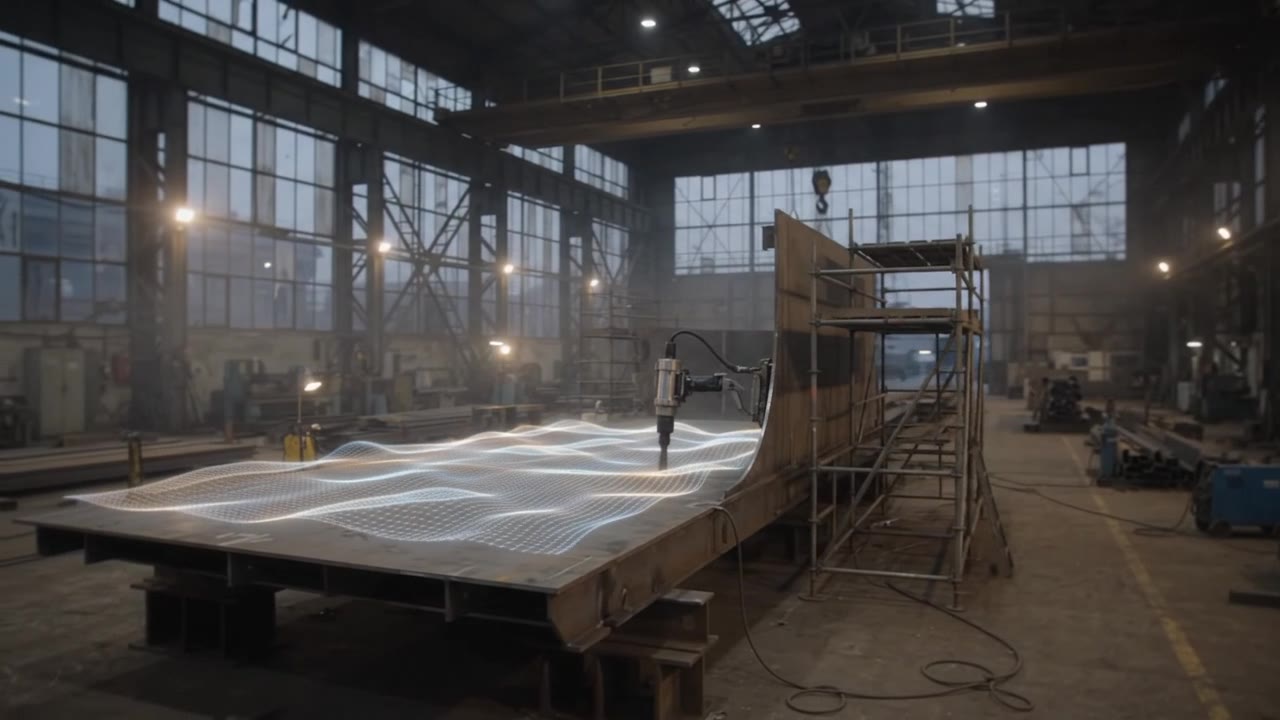
Steel on steel, in a space that reflects it back.
Hull and confined-space work amplifies what a workshop would absorb.
Riveting and plating are genuine peak hazards.
Short, sharp impact noise, not a steady background hum.
Real figures for the space you actually work in.
A confined steel compartment behaves nothing like an open yard.
What the shift actually sounds like
A needle-gun descaler on a hull is loud, sharp, and often worked in a confined space.
Checked against the real action and limit values
The Control of Noise at Work Regulations 2005 set 80 dB(A) lower action, 85 dB(A) upper action and 87 dB(A) exposure limit. A typical needle-gun descaler shift settles between the two action values — confined spaces make it harder to escape, and easier to underestimate.
What you get back
Real exposure levels for your own site, zone by zone, checked against those three figures — not a generic industry figure.
What one assessment actually tells you
One assessment measures the space as it actually is, not as it’s assumed to be — real exposure for your own site, zone by zone, not a generic industry figure.
Real numbers. Real evidence. Every hull, every bay.
See exactly how the check works →Check your first bay
Seeing whether there’s a problem is free. You only pay once you know you want the report.
Works with